
Key Takeaways
- Medical equipment disposal requires secure handling, tracking, and proper documentation.
- Retired devices may contain sensitive data, batteries, or regulated components.
- Inventory records help maintain accountability from collection through final processing.
- Secure destruction, recycling, battery handling, and returns support responsible equipment retirement.
- Early planning can simplify logistics, data protection, recall handling, and compliance records.
When medical equipment becomes obsolete, defective, recalled, surplus, or no longer suitable for use, organizations need a documented plan for its retirement. IoMT Recycling Solutions coordinates medical equipment disposal programs for manufacturers, distributors, healthcare facilities, and remote care providers who need secure handling, recycling, and destruction, along with project records.
A disposal request is more than a pickup request. Electronic medical equipment may contain embedded storage, lithium-ion batteries, proprietary components, serial numbers, or patient-linked information. IoMT Recycling Solutions helps clients organize the logistics, inventory control, processing, and documentation needed to retire those assets responsibly.
Why Medical Equipment Requires a Specialized Disposal Process
Medical devices should not automatically enter an ordinary waste or electronics stream. A defective product that re-enters the secondary market, a device with retained data, or an unrecorded recalled unit can create avoidable operational and compliance concerns. IoMT Recycling Solutions develops disposal plans to ensure equipment is handled under controlled conditions from collection through final processing.
Tracking can be especially important for certain regulated devices. The FDA explains that manufacturers may be required to track specified devices through distribution when the agency orders a tracking system, helping manufacturers locate devices for notifications or recalls.
How IoMT Recycling Solutions Handles a Disposal Request
IoMT Recycling Solutions begins by reviewing the project scope, including the equipment involved, its location, the desired timeline, and the documentation the client requires. The appropriate plan may combine recycling, secure destruction, returns management, recall support, battery handling, and asset reporting.
- Collect project details. The client identifies equipment types, quantities, condition, locations, and requested service dates.
- Plan the logistics. IoMT Recycling Solutions can arrange scheduled or as-needed collection, coordinate shipment to its facility, or support direct returns from end users or distributors when appropriate.
- Document incoming assets. Available manufacturer, model, serial number, weight, and UDI information can be recorded to support asset-level accountability.
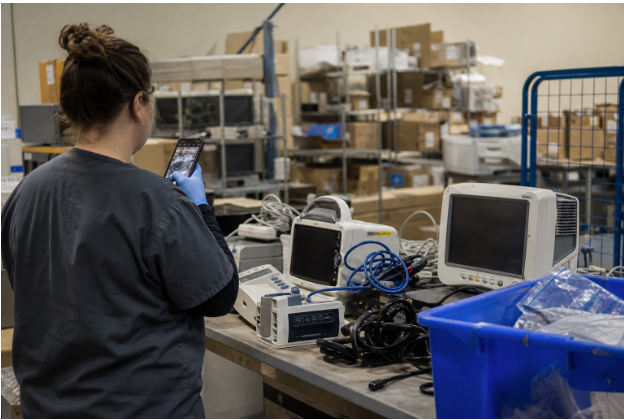
- Process devices securely. Equipment is evaluated for disassembly, destruction of electronics, battery removal, recycling, or other required disposition steps.
- Deliver project records. The client receives the agreed inventory, destruction, recycling, chain-of-possession, and environmental compliance documentation.
Equipment IoMT Recycling Solutions Can Help Retire
IoMT Recycling Solutions supports projects involving many categories of electronic medical and healthcare equipment. The final service approach depends on the device design, condition, volume, location, battery status, and client requirements.
- Monitoring equipment: Heart rate monitors, blood pressure monitors, vital-signs devices, and remote patient monitoring equipment.
- Imaging equipment: MRI systems, CT scanners, X-ray equipment, ultrasound devices, and associated electronics.
- Emergency devices: Automated external defibrillators and related electronic components.
- Medical IT assets: Computers, servers, routers, modems, electronic medical record systems, and point-of-sale hardware.
- Returned or surplus inventory: Customer returns, excess parts, obsolete products, defective units, and discontinued product-line inventory.
Data Protection and Device Destruction
Data-bearing medical equipment may not contain a removable hard drive. Some devices store information in flash memory or other components on the main circuit board. IoMT Recycling Solutions addresses this challenge through controlled disassembly and destruction of relevant electronic components, reducing the risk that data or proprietary information remains accessible on retired equipment.
A complete plan may include data sanitization, physical destruction, and documented destruction. Sanitization addresses stored information. Physical destruction renders designated electronic components unusable. Documentation connects the equipment or project to its recorded final disposition.
Tracking, Documentation, and the Compliance Library™
IoMT Recycling Solutions emphasizes documented control over retired devices. Asset records can include manufacturer, model, equipment type, serial number, weight, and UDI when available. This information can help a client reconcile what was collected, processed, destroyed, or recycled.
The company’s Compliance Library™ is a cloud-based document archive designed to centralize project materials. Depending on the project, records may include quotes, invoices, bills of lading, inventory reports, chain-of-possession records, certificates of destruction, recycling reports, and environmental compliance certificates. Centralized files can be easier to retrieve than records spread across email inboxes, paper files, and disconnected spreadsheets.
Environmental Processing and Battery Management
IoMT Recycling Solutions processes electronic equipment through its secure New Jersey facility and separates materials for appropriate downstream recycling. Batteries require particular attention because damaged or improperly handled lithium-ion batteries can present a fire risk during storage and transportation. Device disassembly can allow batteries to be isolated for suitable handling and recycling.
Responsible end-of-life planning also recognizes that electronics have different material mixes and disposition pathways. The EPA’s electronics end-of-life research models how used electronics move through reuse, recycling, and disposal pathways at the national and state levels. Medical devices should be assessed individually rather than assumed to follow one universal recycling process.
When to Submit a Disposal Request
Organizations should contact IoMT Recycling Solutions as soon as they know equipment needs to be removed from service. Early planning can help coordinate transportation, identify data-bearing devices, quarantine recalled or defective inventory, and determine reporting needs before a deadline becomes urgent.
- A manufacturer needs documented destruction for recalled, defective, or discontinued units.
- A healthcare facility is replacing outdated monitoring, imaging, or IT equipment.
- A distributor is managing customer returns, trade-ins, or excess inventory.
- A remote monitoring program is ending, upgrading, or recovering deployed devices.
- A facility has damaged devices with embedded electronics or batteries.
Information to Include in a Disposal Request
A clear request allows IoMT Recycling Solutions to recommend a practical scope of work. Include the organization and primary contact, equipment category and manufacturer, model or serial numbers, UDI data when available, estimated quantity, current location, device condition, reason for disposal, data or battery concerns, required timeline, and requested certificates or reports.
Frequently Asked Questions
Can IoMT Recycling Solutions support a one-time project?
Yes. A disposal request can cover a single removal project or become part of an ongoing recycling, destruction, returns, or inventory-management program.
Can IoMT Recycling Solutions help with recalls and returns?
Yes. The company can support physical returns, inventory control, serialized reporting, secure destruction, and recycling. Manufacturers remain responsible for their recall strategy and required regulatory communications.
What happens after equipment is processed?
IoMT Recycling Solutions provides the agreed-upon records for the project, which may include inventory details, destruction documentation, recycling reports, and environmental compliance records.
A More Controlled Way to Retire Medical Equipment
IoMT Recycling Solutions brings logistics, asset tracking, secure destruction, battery handling, recycling, returns support, and documentation into one coordinated disposal process. By submitting complete equipment and timeline details at the start, organizations can build a retirement plan that supports operational control, data protection, environmental responsibilities, and audit-ready records.